What Words of Affirmation Really Means
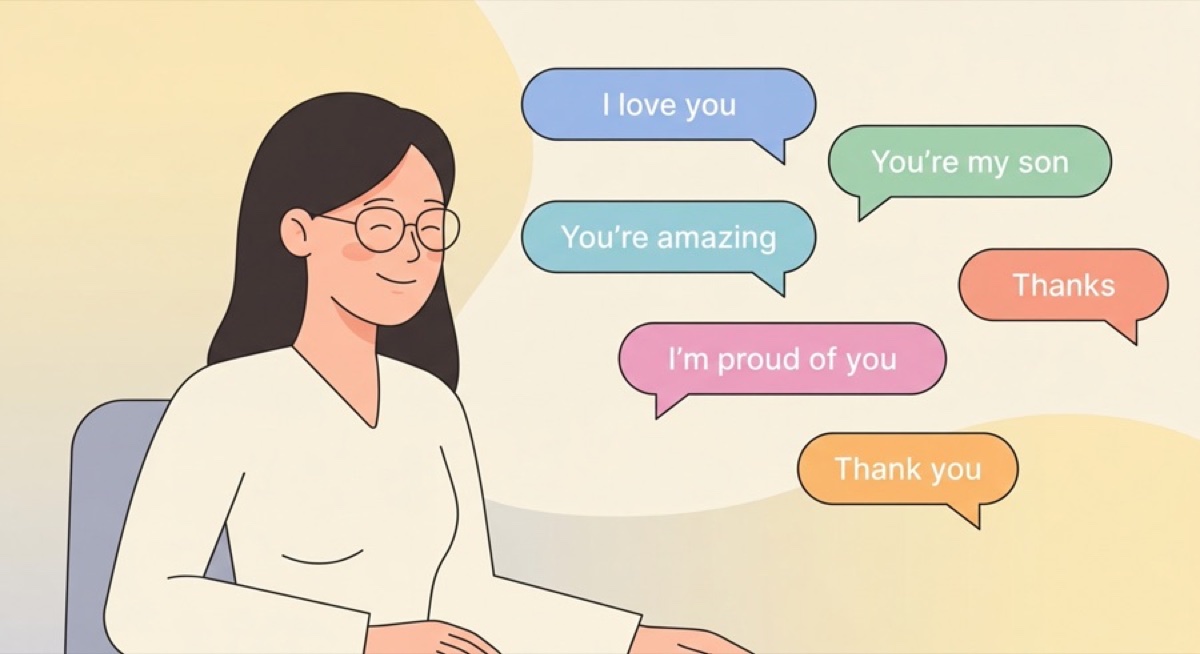
Words of Affirmation is one of the 5 love languages identified by Dr. Gary Chapman. At its core, it's the belief that love is best expressed through spoken or written words — compliments, encouragement, expressions of gratitude, and verbal acknowledgment. For someone whose primary love language is Words of Affirmation, hearing "I love you," "I'm proud of you," or "You look amazing today" doesn't just feel nice. It feels necessary.
These individuals pay close attention to the words people use with them — not in a hypersensitive way, but because words carry enormous emotional weight for them. They tend to remember kind things said to them years ago, and they also remember cutting remarks. Harsh words, sarcasm, or dismissive language can wound them deeply, even if the speaker meant it lightly. Understanding this is the first step to speaking this language fluently.
Why Some People Feel Love Through Words
The reasons someone develops Words of Affirmation as their primary love language vary. Some grew up in households where verbal praise and expression were common, so they learned to associate love with language. Others may have grown up in emotionally quiet households where words of love were rare, making them all the more powerful when they do occur. Still others simply process emotions more through language — they're verbal processors who find meaning in articulation.
Whatever the origin, the result is the same: for these individuals, unsaid love sometimes feels like unloved love. If their partner loves them deeply but rarely says it, they may begin to doubt the relationship, not because the love isn't real but because it's not being communicated in a language they can receive. This is why learning to identify and speak your partner's love language is so valuable.
The Difference Between Flattery and Affirmation
Not all words are created equal for people who speak this language. Empty flattery ("You're literally the best at everything") feels hollow and performative. What they crave is sincere, specific affirmation. "I noticed how patient you were with the kids today even though you were exhausted — I really admire that about you" lands far more powerfully than a generic compliment. Specificity signals that you've actually been paying attention.
Affirmation also goes beyond compliments. It includes words of encouragement during hard times ("I believe in you, even when things are tough"), words of appreciation for small things ("Thank you for always making coffee before I wake up — it means more than you know"), and verbal acknowledgment of their feelings ("That sounds really hard. I hear you"). All of these are forms of affirming language that fill the emotional tank of someone who speaks this love language.
100 Affirming Things to Say to Your Partner
Here are 100 genuine, specific things you can say — or text, write in a note, or whisper — to someone whose love language is Words of Affirmation. Adapt them to fit your relationship and your own voice.
Love & Appreciation (1–20):
1. "I love you more than I know how to say."
2. "You make every day better just by being in it."
3. "I'm so grateful you're mine."
4. "I choose you. Every single day."
5. "You are my favourite person."
6. "I fall in love with you a little more all the time."
7. "Thank you for being exactly who you are."
8. "I don't tell you enough how much you mean to me."
9. "Loving you is the best thing I've ever done."
10. "I notice all the little things you do for us."
11. "You make our house feel like a home."
12. "I appreciate you more than you know."
13. "Being with you feels easy in the best possible way."
14. "I love the life we're building together."
15. "You are enough, exactly as you are."
16. "I never take you for granted, even when it seems like I do."
17. "My life is genuinely better with you in it."
18. "I love how your mind works."
19. "You are one of the most thoughtful people I know."
20. "I'm proud to be with you."
Encouragement & Support (21–40):
21. "You can do this. I believe in you completely."
22. "I've watched you handle hard things before — you've got this."
23. "Your resilience genuinely inspires me."
24. "Even when you doubt yourself, I don't doubt you for a second."
25. "Whatever happens, I'm right here beside you."
26. "You work so hard, and it shows."
27. "I see how much effort you're putting in."
28. "You are stronger than you think."
29. "That took real courage, and I'm proud of you."
30. "Don't give up. You're closer than you think."
31. "Your dreams are worth chasing, and I'll cheer you on every step."
32. "You handled that so gracefully."
33. "Watching you grow has been one of the great joys of my life."
34. "You don't have to be perfect. I love you anyway."
35. "I'm in your corner, always."
36. "Your passion is one of the things I admire most about you."
37. "You are more capable than you give yourself credit for."
38. "Even on your worst days, you still show up. That's remarkable."
39. "I trust your judgment."
40. "Whatever you decide, I support you."
Physical & Personality Compliments (41–60):
41. "You look incredible today."
42. "That colour looks amazing on you."
43. "Your smile is genuinely one of my favourite things."
44. "I love the way you laugh."
45. "You have no idea how attractive you are."
46. "I love how your eyes crinkle when you really smile."
47. "You are so beautiful, and I mean that in every possible way."
48. "I find you more attractive the better I know you."
49. "Your kindness is one of the most beautiful things about you."
50. "I love how passionately you care about things."
51. "You are so smart, and I don't say that enough."
52. "Your creativity genuinely amazes me."
53. "You have a way of making everyone around you feel comfortable."
54. "I love how generous you are."
55. "Your sense of humour makes everything better."
56. "You have such a good heart."
57. "I love how you're always learning and growing."
58. "Your empathy for other people is a gift."
59. "I love your taste in everything — music, food, people."
60. "You are genuinely one of the most interesting people I've ever met."
Everyday Moments (61–80):
61. "Thank you for making dinner. It was exactly what I needed."
62. "I noticed you refilled my water bottle without me asking. That's love."
63. "You handled that really well today."
64. "I love how you are with our friends."
65. "The way you talked to that person was so thoughtful."
66. "You made today so much better."
67. "I'm always happy when we're together."
68. "I was thinking about you today, just because."
69. "I love our little routines."
70. "I'm really glad we had this time together."
71. "Thank you for being patient with me today."
72. "I love how comfortable I feel with you."
73. "You give the best hugs."
74. "I love hearing your voice."
75. "Just being near you is enough for me."
76. "I love the way you see the world."
77. "You bring out the best in me."
78. "I love our inside jokes."
79. "You remembered something small that I mentioned weeks ago. That meant everything."
80. "You make ordinary days feel special."
Deep Connection (81–100):
81. "I can't imagine my life without you in it."
82. "You understand me like nobody else does."
83. "I feel safe when I'm with you."
84. "I love that we can talk about anything."
85. "I love who I am when I'm with you."
86. "You know me better than anyone, and you still choose me — that means everything."
87. "I'm so glad our paths crossed."
88. "There is nobody in the world I'd rather go through life with."
89. "You are my home."
90. "I love the family we've built together."
91. "I think about our future and it makes me smile."
92. "I want to keep choosing you for the rest of my life."
93. "You have changed me for the better."
94. "I love the way we fight for each other, not against each other."
95. "I'm sorry — I was wrong, and I love you."
96. "I forgive you. Let's move forward together."
97. "I love how we always find our way back to each other."
98. "Thank you for never giving up on us."
99. "Growing old with you is one of the things I'm most looking forward to."
100. "I love you — not because I have to, but because I'd choose you every time."
How to Speak This Language If It Doesn't Come Naturally
For people who grew up in families where emotions weren't spoken aloud, or who tend to express love through actions rather than words, Words of Affirmation can feel forced or even awkward at first. That's completely normal. The goal isn't to become someone you're not — it's to stretch slightly in a direction that matters deeply to your partner.
Start small and specific. Instead of trying to craft the perfect speech, begin with one sincere observation per day: "You handled that call really well," or "Dinner was delicious, thank you." Text messages are a low-pressure way to start — a simple "I was thinking about you" or a screen-grab of something that reminded you of them costs nothing and means everything. You can also use our Romantic Text Messages tool for inspiration when you're stuck for words.
Written Words Count Too
Don't underestimate the power of written affirmation for people who speak this language. A handwritten note tucked into their bag, a sticky note on the bathroom mirror, or a heartfelt email sent mid-day can be just as powerful as a spoken compliment — sometimes more so, because they can re-read it. The permanence of written words gives them extra weight.
If you struggle to speak affirmation out loud, writing is a wonderful entry point. You can take your time, be thoughtful, and say exactly what you mean without feeling put on the spot. Try writing a love letter using our Love Letter Generator to get started, or simply write three things you genuinely appreciate about your partner and slip it somewhere they'll find it. The impact is often profound.
Avoiding the Words That Wound
Just as affirming words fill the emotional tank of someone who speaks this language, harsh or dismissive words drain it faster than anything. Criticism delivered without care, sarcastic put-downs said in frustration, or prolonged silent treatment can feel catastrophic to this person — even if you've forgotten you said it by the next day.
This doesn't mean you can never disagree or express frustration. It means being mindful of how you deliver difficult messages. "I feel frustrated when..." lands very differently than "You always..." Owning your feelings with "I" statements, avoiding contempt, and apologising sincerely when you've said something hurtful are all part of speaking this language well. Explore our complete love languages guide to understand how this connects to the broader framework of loving intentionally.