What Makes a Romantic Relationship Thrive
Decades of relationship research have identified the qualities that distinguish thriving partnerships from struggling ones. They are perhaps not what you would expect. The couples who fare best are not the ones who never fight — they are the ones who fight well, recover quickly, and maintain what psychologist John Gottman calls a "positive sentiment override": a general warmth and goodwill that means small irritations are absorbed rather than escalated.
Shared activities, regular expressions of appreciation, physical affection, and — crucially — genuine curiosity about each other's inner lives are all strong predictors of long-term relationship satisfaction. The couples who are still reaching for each other's hands at sixty are, almost universally, the ones who kept asking questions, kept noticing, and kept making small investments in each other's happiness long after the honeymoon phase gave way to ordinary life.
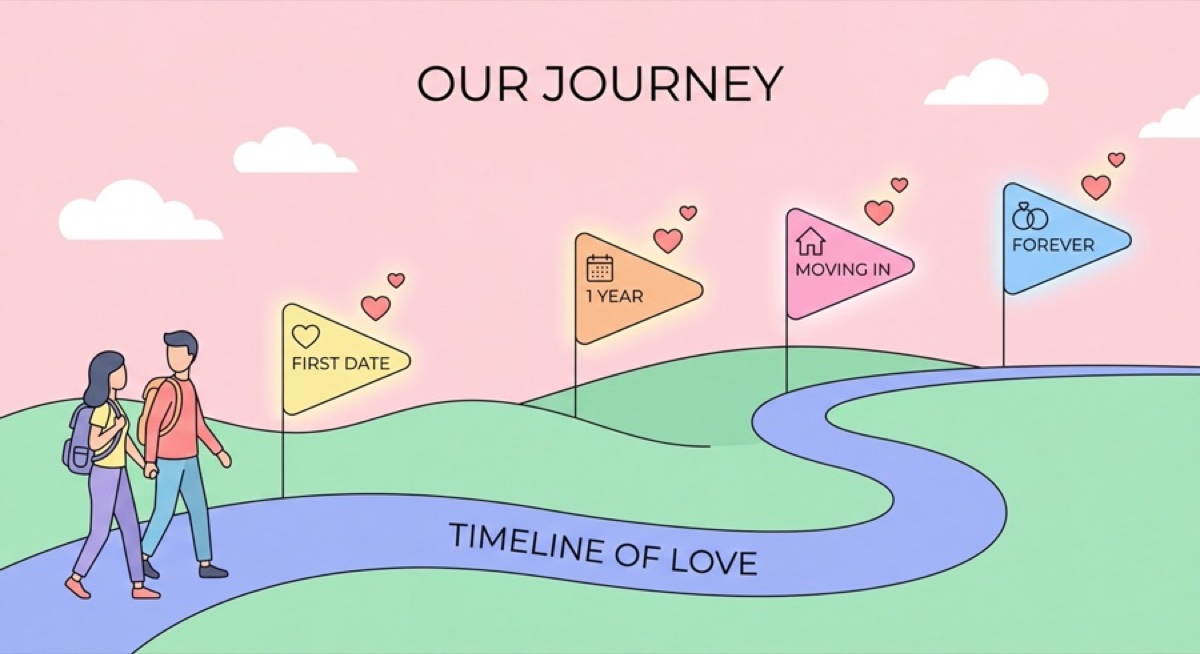
This hub covers all the key terrain: from the early days of falling in love through the deep architecture of long-term partnership, with practical tools at every stage. Use it as a map, not a checklist.
The Early Stages: Falling in Love and Starting Right
The beginning of a romantic relationship is one of the most neurologically intense experiences a human being can have. The brain is flooded with dopamine, norepinephrine, and serotonin — a chemical cocktail that produces euphoria, obsessive thinking, and that distinctive feeling that this person is remarkable in a way no one has ever been remarkable before. This is real, and it is also temporary. Understanding this helps you make better decisions in those early weeks and months.
The most important thing to do in early stages is stay curious rather than projecting. The person you are falling for is not yet the person you know fully — they are the person you are beginning to know. Asking good questions matters enormously here. Our First Date Conversation Starters tool gives you prompts that open up real conversation rather than surface-level small talk, and our Questions for Couples tool deepens that conversation as the relationship develops.
Romance: What It Is and How to Sustain It
Romance is often confused with grand gestures — proposals on clifftops, surprise weekends in Paris, flowers delivered to the office. These things are lovely, but they are not the foundation of lasting romance. Lasting romance is built from something more ordinary: the consistent practice of attention. Noticing what your partner loves and acting on it. Creating moments of deliberate togetherness. Expressing appreciation before it becomes assumed.
Research on relationship maintenance behaviours consistently shows that the couples who report the most sustained romantic satisfaction are those who have developed habits — small, regular acts — of romance rather than depending on occasional peaks. A weekly date night that actually happens matters more than a spectacular anniversary trip that compensates for eleven months of mutual neglect. For ideas at every budget and occasion, our Date Ideas tool generates suggestions tailored to your situation, and our Romantic Text Messages tool gives you inspiration for the daily moments in between.
Communication: The Engine of Every Good Relationship
If you had to identify a single skill that predicts relationship success above all others, communication would be it — specifically, the ability to express your own needs clearly and to listen to your partner's needs without becoming defensive. Neither of these comes naturally to most people. Both can be learned.
The most common communication failure in relationships is not conflict — it is avoidance. The things that do not get said accumulate quietly into resentment that erupts later over something apparently trivial. The couples who talk openly and regularly about their relationship — what is working, what feels hard, what they need more of — develop a shared language and a trust that insulates them against most of the ordinary pressures that erode relationships over time. Tools like our Questions for Couples tool provide structured prompts that make these conversations easier to start, and our Truth or Dare for Couples offers a playful way to surface things that might otherwise stay unsaid.
When Things Get Hard: Conflict, Apology, and Recovery
Every relationship goes through difficult seasons. Job losses, bereavements, health crises, parenting pressures, the slow drift that can develop when two people are both exhausted — these are not signs that a relationship is wrong. They are signs that two people are human and that life is unpredictable. The question is not whether hard times will come but how the partnership navigates them when they do.
The research here is clear: the quality of repair matters far more than the frequency of conflict. Couples who can argue, reach a resolution, and then genuinely reconnect — without one partner carrying quiet resentment and the other pretending it never happened — are substantially more resilient than couples who avoid conflict entirely. Learning to apologise well is one of the most valuable relationship skills. Our guide on how to apologise to your partner covers the anatomy of a real apology versus a defensive one.
Long-Term Love: Keeping the Relationship Alive
The greatest challenge in any long relationship is not dramatic — it is the slow creep of familiarity becoming invisibility. When two people know each other very well, they can stop truly seeing each other: their partner becomes scenery rather than person. The couples who avoid this are those who maintain what psychologists call "positive illusions" — a willingness to see their partner as somewhat more wonderful than a dispassionate outside observer might — and who keep investing attention in each other as individuals.
This means continuing to ask questions, even of someone you have known for twenty years. It means noticing and naming things you appreciate, rather than assuming they know. It means physical affection maintained even when daily life is not romantic. And it means creating shared experiences — new ones, not just nostalgic reruns of old ones. Our guide on keeping romance alive long-term goes deep on all of these strategies, and our Anniversary Calculator helps you mark the milestones that keep a relationship feeling meaningful and celebrated.
Tools to Help You Love Better
Good intentions alone do not build good relationships — habits and tools do. Throughout this hub you will find articles and connected tools designed to help you take action rather than just understand. The Love Letter Generator helps you express what is hard to say face to face. The Questions for Couples tool generates conversation prompts for every stage and mood. The Date Ideas generator removes the friction of planning. The Anniversary Calculator keeps you from forgetting what matters.
Use this hub as your starting point. Each article below goes deep on a specific aspect of romantic relationship — with real, practical advice drawn from relationship science and the wisdom of people who have built partnerships worth admiring. Love is a practice, not a state. This is where the practice begins.