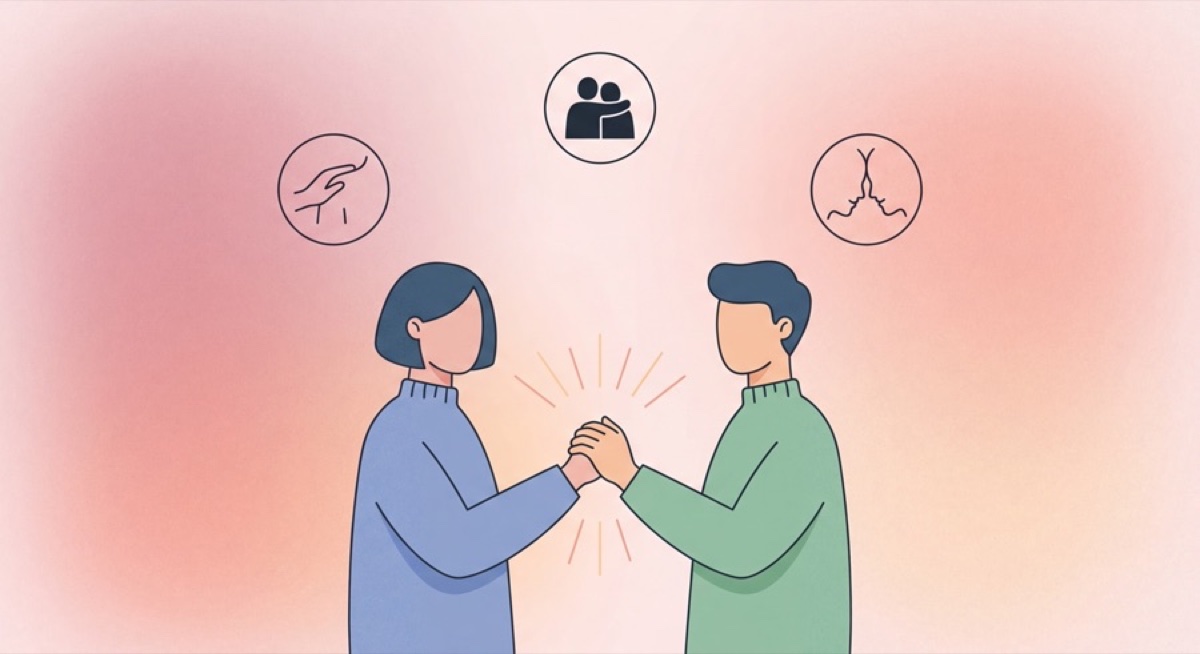
Understanding Physical Touch as a Love Language
Physical Touch is one of the 5 love languages, and it's one of the most primal. Long before humans developed language, touch was the primary channel for communicating safety, belonging, and affection. For people whose primary love language is Physical Touch, this ancient channel remains the most direct route to their heart. A hand on the arm in a moment of stress, a long hug at the end of a hard day, a foot resting against a partner's during dinner — these aren't small things. They're how this person knows they are loved.
It's important to note what Physical Touch is not: it is not primarily about sexual intimacy, though that is part of it. The love language of Physical Touch is much broader and encompasses non-sexual physical connection throughout the day. Couples who meet this need successfully tend to be physically affectionate in dozens of small, casual ways — the kind that are easy to miss but devastating to lose.
The Science Behind Touch and Connection
The neuroscience here is striking. Physical touch — even a brief one — triggers the release of oxytocin, often called the "bonding hormone," as well as serotonin and dopamine. These neurochemicals reduce cortisol (the stress hormone), lower blood pressure, and create a physiological sense of safety and well-being. For someone whose love language is Physical Touch, their nervous system is literally calibrated to receive love through physical contact. When touch is absent or rare, they don't just feel unloved — they can feel anxious, disconnected, and untethered.
Research on skin hunger — the term psychologists use for touch deprivation — shows that people who receive insufficient human touch experience greater rates of anxiety, depression, and loneliness, even when their other social needs are met. This validates what Physical Touch people have always known instinctively: touch is not a luxury. It is a fundamental human need.
The Importance of Small, Everyday Gestures
The power of this love language lies in accumulation. A single grand gesture of physical affection means less than a consistent pattern of small, daily touches that say "I'm here, I see you, I love you." Here are examples of the kinds of everyday touches that genuinely matter to someone who speaks this language:
A hand on the small of their back as you pass them in the kitchen. Holding hands while walking, not just in romantic moments but routinely. A kiss on the forehead when they're stressed. Sitting close enough to touch on the sofa instead of at opposite ends. Running a hand through their hair while watching TV. A full-body hug that lasts long enough to actually be felt — not the brief, pat-on-the-back kind. Touching their arm when making a point in conversation. Reaching for their hand in the car. None of these require planning or significant effort. Together, they create an atmosphere of physical warmth that this person lives inside every day — or desperately misses when it's not there.
Touch in Difficult Moments
For Physical Touch people, touch is especially powerful during hard times. When they are sad, anxious, overwhelmed, or grieving, what they need most is often not advice, problem-solving, or even words — it's to be held. A hand held in silence can communicate more care than a long speech. Partners who instinctively reach out physically during their partner's distress will find this person feels deeply understood and supported, even if nothing practical is being solved.
The absence of touch during conflict is equally significant. For most Physical Touch people, emotional distance is mirrored by physical distance, and the combination is particularly painful. They may find that a brief touch — reaching for their partner's hand during a difficult conversation, or a hug after an argument before the issue is fully resolved — helps them feel safe enough to engage more constructively. Touch reassures them that the relationship is intact even when things are hard.
Long-Distance Challenges for Physical Touch People
Of all the love languages, Physical Touch faces the most direct challenge in long-distance relationships. You simply cannot replicate touch across a screen. This means couples where one or both partners have Physical Touch as their primary language need to be especially intentional about the other love languages during separation, and about maximising physical connection during any in-person time they do have. We cover this in much more depth in our guide to love languages in long-distance relationships.
Some practical strategies include: longer, more intentional physical greetings and farewells (don't rush the goodbye hug — let it be the kind that carries you through the days ahead); sending physical objects that carry personal warmth, like a worn hoodie or a photo in a frame; video calls where you position yourself as close to the camera as possible to maximise the sense of presence; and being honest with each other about how much the distance is affecting your sense of connection. When in person, prioritise physical proximity — even just sitting very close, making physical contact a near-constant presence during your time together.
If Touch Doesn't Come Naturally to You
Some people grew up in families where physical affection was rare, which can make initiating or sustaining non-sexual touch feel awkward or even uncomfortable. If your partner's love language is Physical Touch and it doesn't come naturally to you, the key is to start small and build habits deliberately.
Choose one or two specific touchpoints in your day to anchor physical affection to: always kiss them good morning, always hold their hand during a walk, always hug them when you come home. These ritualized moments of touch become second nature over time and mean a great deal to your partner even before they feel entirely natural to you. Be transparent with your partner too — telling them "I want to be better at this, and I'm working on it" is itself an act of love that they will likely appreciate deeply. Also explore how all the love languages interact in our guide to navigating different love languages in a relationship.