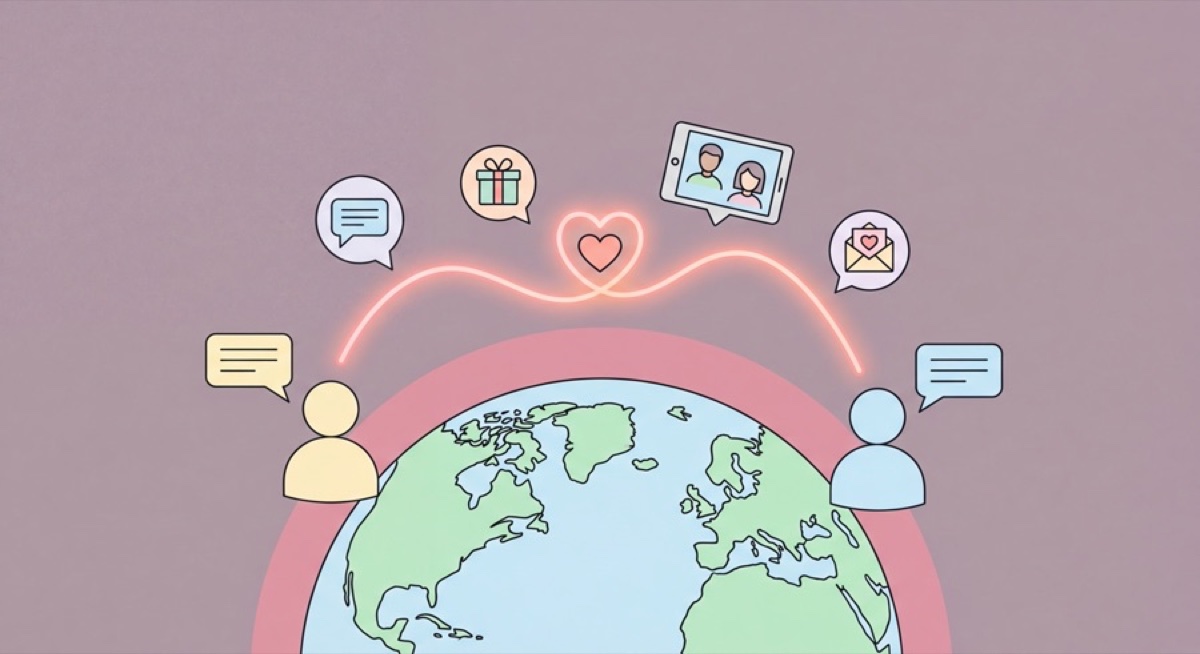
Why Love Languages Matter More in Long Distance
Long-distance relationships strip away many of the automatic, low-effort ways couples express love: a quick kiss goodbye, a hand reached for across a table, a cup of tea left on a desk. What remains requires deliberate intention — and this is where understanding the 5 love languages becomes especially valuable. Knowing your partner's love language allows you to direct your limited bandwidth toward the things that will actually fill their emotional tank, rather than scattering effort across gestures that may not resonate.
Long distance also reveals love language mismatches more sharply. If your love language is Physical Touch and your partner's is Words of Affirmation, the distance will hit you harder than it hits them. Acknowledging this asymmetry — naming it openly and compassionately — is the first step toward navigating it together. You may need to lean into secondary love languages during long-distance periods and consciously build up habits in languages that feel unfamiliar. The effort is worth it.
Words of Affirmation in Long Distance
Long-distance couples actually have a structural advantage here: the distance creates natural written communication — texts, voice notes, emails, letters — that provides a rich medium for Words of Affirmation. Use it. Don't let communication collapse into logistics ("I'll call at 8") or habit ("good morning, good night"). Inject genuine affirmation into your regular messages: what you've been thinking about them, something specific you appreciate, a memory that made you smile.
Voice notes are particularly powerful for Words of Affirmation people because they carry tone, warmth, and spontaneity that text can't fully replicate. A thirty-second voice note sent after a meeting saying "I just wanted to tell you I'm proud of you and I love you" can sustain an entire day. Handwritten letters sent by post carry enormous weight — the physical object, the handwriting, the time investment all communicate love in ways that digital messages can't. Use our Love Letter Generator to help draft something heartfelt, then write it out by hand and post it.
Acts of Service in Long Distance
Acts of Service in a long-distance relationship requires creativity, because many acts of service depend on physical proximity. But there are meaningful things you can do remotely. Order their favourite meal for delivery when you know they're having a hard week. Handle an online task for them — researching a purchase, booking a flight, finding a tradesperson — so they have one less thing to manage. If they're ill, arrange for a care package to be delivered. If they're stressed before an important event, help them prepare — run through their presentation with them on video, proofread their application, listen to their pitch.
Digital acts of service also count: organising a shared playlist for their commute, setting up a shared photo album that you both add to, or helping them troubleshoot a tech problem remotely. The intention behind the action is the same — "I'm thinking about your needs and I'm doing something about it, even from here." When you're finally together in person, Acts of Service people will notice if you arrive ready to take things off their plate — filling the fridge before you get there, arriving early to help with something they've been managing alone.
Quality Time in Long Distance
Quality time requires presence, which is why video calls are the cornerstone of long-distance Quality Time — but only if both people are genuinely present on those calls. A video call where one person is also texting, doing dishes, or half-watching TV is not quality time. Protect your call time the way you would protect an in-person date: eliminate distractions, be fully engaged, make eye contact with the camera.
Go beyond passive calls by creating shared experiences remotely. Watch the same film simultaneously while on a call or using a synchronised streaming service. Cook the same recipe together on video. Take an online class together. Send each other the same book and read it simultaneously, then discuss it on your calls. Play an online game together. These activities create the shared experience that is the essence of Quality Time — the sense of doing something together, even from a distance. Our Questions for Couples tool is also excellent for long-distance video calls — it generates conversation prompts that deepen connection when you want more than surface-level chat.
Physical Touch in Long Distance
Physical Touch is the hardest love language to maintain in long distance, and it's important to be honest about that. There is no perfect substitute for physical presence. However, there are things that can help. Send your partner something physical that carries your warmth: a worn hoodie that smells like you, a soft blanket, a pillow you've slept on. These objects — which might seem trivial to someone whose love language is different — can provide genuine comfort for a Physical Touch person. The object becomes a proxy for your presence.
Also: maximise the in-person time you do have. Don't waste reunion visits on logistics and catch-up tasks if you can help it. Spend as much of that time as possible in close physical proximity — not necessarily doing anything dramatic, just sitting close, holding hands, maintaining that near-constant physical contact that this person craves. Greetings and farewells are especially important. A lingering goodbye that takes its time — a long, slow hug that acknowledges the difficulty of the separation — means far more than a rushed departure. It carries this person through the distance. See also our physical touch love language guide for more.
Receiving Gifts in Long Distance
Long distance is actually a beautiful opportunity for the Receiving Gifts love language, because sending something physical bridges the physical gap in a tangible way. The object that arrives in the post from your partner is a piece of their thought and care, made real and holdable. A care package, a postcard from somewhere they visited, a book they finished and want you to read next — all of these are love made physical.
The key, as always with this love language, is thoughtfulness over expense. A £2 postcard with a handwritten note on the back often means more than an expensive gift chosen without specific intention. Create a habit of sending small things regularly: a pressed flower, a local sweet, a print of a photo from one of your visits together. Apps like Touchnote or Moonpig allow you to send physical postcards and cards from your phone in minutes, removing every barrier to this kind of ongoing gifting. The consistent arrival of small, thoughtful things creates an ongoing sense of being thought of — which is exactly what this love language person needs across a distance.
Making Long Distance Sustainable
Beyond the love languages, long-distance relationships require three things to thrive: a shared timeline (an end date, or at least a plan toward being together), consistent and intentional communication, and a willingness to be honest about what's hard. If the distance is affecting your sense of connection or your emotional wellbeing, say so — not as a complaint but as an invitation to problem-solve together. "I've been finding it hard lately — can we talk about what might help?" is far more productive than suffering silently.
Revisit your love languages as a topic regularly during long distance. What each of you needs can shift as the distance continues, as life circumstances change, or as particular stressors arise. The goal is to keep asking: "How can I love you well from here?" — and to keep answering that question with creativity, consistency, and genuine care. Explore more ideas in our full love languages guide and our Date Ideas tool for virtual date inspiration.