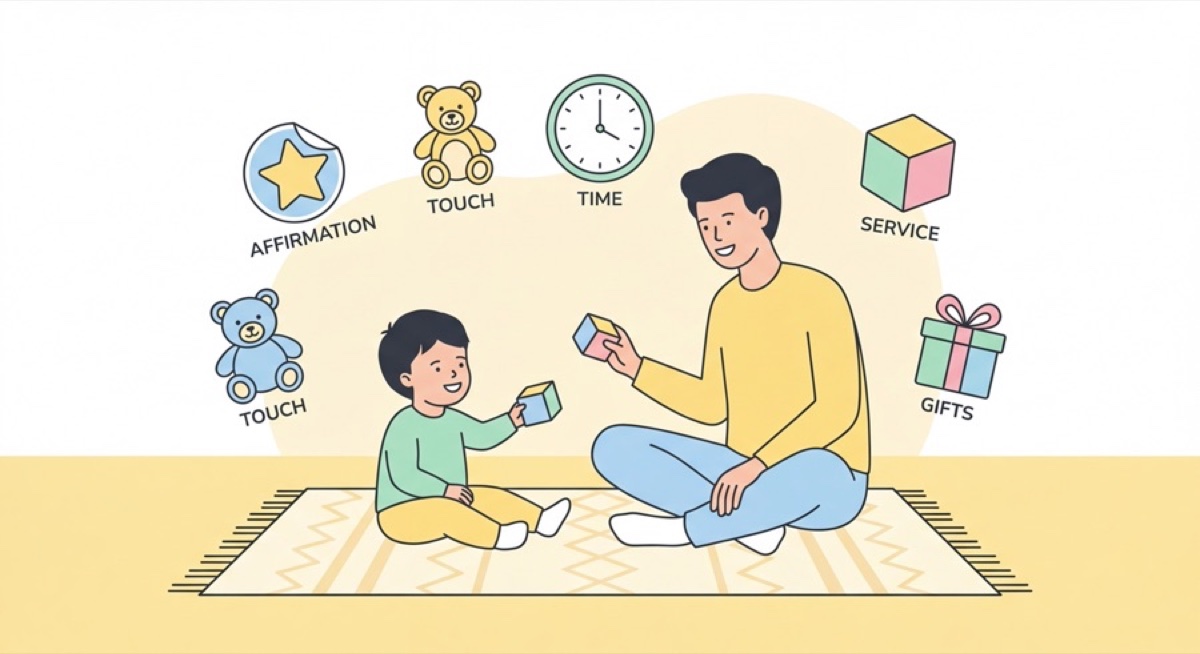
Do Children Really Have Love Languages?
Dr. Gary Chapman, in collaboration with child therapist Ross Campbell, extended the love languages framework to children in the book The 5 Love Languages of Children. Their core insight was the same as for adult relationships: children have an emotional tank that needs to be filled, and the most efficient way to fill it is through their primary love language. A child whose emotional tank is full tends to be more cooperative, more resilient, more emotionally regulated, and more confident. A child whose tank runs empty — even in a home full of genuine parental love — can become difficult, attention-seeking, or withdrawn.
Children's love languages are not always obvious, and they can differ significantly from their parents' languages — which is where mismatches can quietly develop. A parent who expresses love primarily through Acts of Service (making lunch, driving to activities, managing the household) may be puzzled why their Quality Time child seems distant. The child isn't ungrateful — they just can't hear love in that frequency. Understanding the 5 love languages and applying them in parenting creates profoundly different outcomes.
How to Spot Your Child's Love Language
Children reveal their love language in similar ways to adults: through their complaints, their requests, and the way they show love to others. A child who frequently asks "But do you love me?" or "Will you tell me something nice?" is almost certainly Words of Affirmation. The child who climbs onto your lap constantly, asks for hugs, holds your hand everywhere — Physical Touch. The child who is always drawing pictures for you, bringing you objects ("this is for you"), and treasuring small things you give them — Receiving Gifts. The child who says "Come play with me" or "Watch me do this" repeatedly — Quality Time. The child who notices when you do things for them and is visibly grateful for practical help — Acts of Service.
Watch also how they attempt to express love toward you and toward siblings or friends. Children naturally give love in the language they want to receive. If your child is always making things for others, always bringing small offerings, always doing kind acts for the people they love — that's a window into their language. You can also gently ask older children directly: "What's one thing I do that makes you feel really loved?" Children as young as seven or eight can often answer this question with surprising clarity.
Words of Affirmation for Children
Children who speak Words of Affirmation thrive on specific, genuine praise. The key word is specific: "You did a great job" is fine, but "I noticed how patient you were with your little brother when he knocked down your tower — that showed real kindness, and I'm proud of you" is far more powerful. Specificity communicates that you were actually paying attention, which is the heart of what they need.
Affirmation for children also includes encouragement during difficulty, verbal acknowledgment of their feelings, and words of unconditional love that aren't tied to performance. "I love you even when you make mistakes" and "I'm proud of the effort, not just the result" are incredibly important for this child. Write notes in their lunchbox. Leave a sticky note on their mirror. Text them when they're old enough. Read bedtime books that include affirming language, then echo it in your own words. Be mindful of how you correct this child — criticism delivered harshly will land very hard and linger. Aim to maintain a ratio of at least five positive statements for every one critical one, especially during periods of learning or difficulty.
Acts of Service for Children
Children who feel loved through Acts of Service notice and deeply appreciate when parents do things for them — not just basic childcare, but acts that go the extra mile. Making their favourite dinner when they've had a bad day at school. Helping them build something they're struggling with. Fixing a toy that broke. Volunteering at their school event. Driving a long way for an activity they care about.
As children grow into teenagers, Acts of Service becomes increasingly meaningful in the form of practical support: helping with a CV, giving them a lift without complaint, helping them research something they're figuring out, doing something practical to prepare them for a challenge. One important nuance: this child also needs to learn age-appropriate independence, so the goal isn't to do everything for them — it's to step in with visible, willing effort at the moments when help genuinely matters. The difference between a parent who helps when asked and one who notices the need and acts without being asked is enormous to this child.
Quality Time for Children
Quality Time children need your undivided, focused presence — and they notice immediately when they don't have it. If you're on your phone while they're trying to show you something, or half-listening while doing something else, they register the divided attention acutely and experience it as a form of rejection, however unintentional. This child needs you to put things down, get on the floor, make eye contact, and be fully there.
Age-appropriate Quality Time looks different across childhood. With toddlers: get on the floor and play alongside them in whatever they've chosen, following their lead. With school-age children: have a dedicated "special time" — even fifteen minutes a day where they choose the activity and you participate with full attention. With tweens and teenagers: the time often looks more like being in the same space during an activity they choose (gaming, baking, watching their show), or having conversations in the car where the intimacy of side-by-side positioning makes it easier to open up. The consistent message this child needs is: you are worth my full attention, and I enjoy spending time with you.
Physical Touch for Children
Physical Touch children are the easiest to identify: they climb on you, hang off you, seek hugs constantly, and seem to need physical reassurance throughout the day. This is not clinginess to be discouraged — it's a language to be answered. For young children, responding consistently to requests for physical affection builds deep security. Studies in developmental psychology consistently show that children whose need for physical connection is reliably met in early childhood are more securely attached, more emotionally resilient, and more independent in later years, not less.
As children grow older, the form of physical touch shifts but the need doesn't disappear. Pre-teens and teenagers who speak Physical Touch still need and want physical affection from parents — but they may become more selective about when and how it's given (a hug at home is fine; a hug in front of their friends might not be). Read your child's cues and adapt. A hand on the shoulder, a squeeze of the arm, a casual pat on the head as you pass — these small, low-profile physical connections still fill this teenager's emotional tank significantly. Never withdraw physical affection as a form of discipline for a Physical Touch child — this is experienced as a profound rejection that far exceeds the intended consequence.
Receiving Gifts for Children
Children who speak Receiving Gifts are sometimes mischaracterised as greedy or materialistic, especially when they seem more focused on presents than family togetherness during celebrations. But as with adults, the language is about thoughtfulness and the symbol of being remembered, not about accumulation or value. This child treasures the things you give them — not because of what they cost, but because they are physical proof that you were thinking of them.
You can speak this language beautifully without spending money. Leave a small drawing under their pillow. Bring them a rock you found that reminded you of them. Hand them a piece of fruit from the garden with a little note. Give them a small "just because" token when you've been away — a postcard, a local sweet, a pebble from the beach. For older children, the thoughtfulness of a personalised gift — a book you chose specifically because of something they said they were interested in, or a small item that references an inside joke — means far more than something generic and expensive. Teaching this child that the value of a gift is in the thought behind it is also one of the most valuable lessons they'll carry into their own adult relationships.