Saranghae, Saranghaeyo, Saranghamnida: Choosing the Right Level
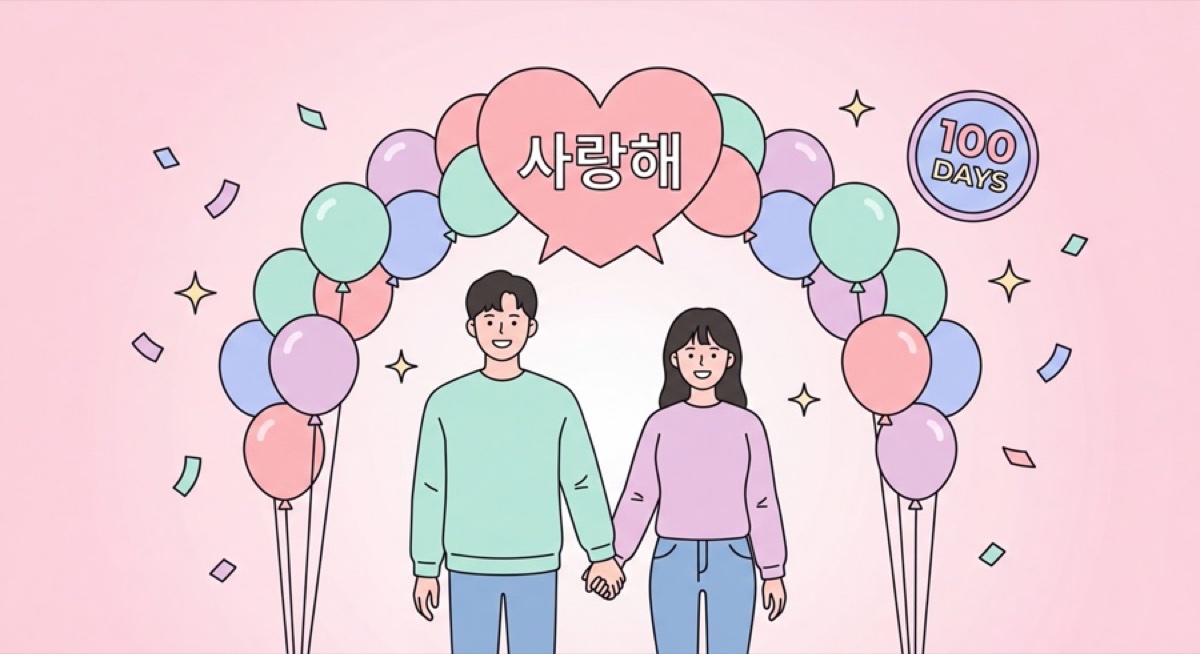
The Korean language operates on a system of speech levels that reflect the relative social status and intimacy between speakers. This means "I love you" is not a single phrase — it is a family of phrases, and choosing the right one is an act of social awareness. Saranghae (사랑해) is the informal, intimate form — used between close friends, family, and romantic partners who have established genuine closeness. It is the form you would use with someone you are deeply comfortable with, without ceremony.
Saranghaeyo (사랑해요) adds the polite ending -yo, making it appropriate for situations that call for some formality — perhaps early in a relationship, or when speaking to someone slightly older. It is respectful without being distant. Saranghamnida (사랑합니다) is the formal, elevated version — used in formal speeches, songs, and dramatic declarations. When K-pop idols address their fans with love, this is often the form they use. If you have watched K-dramas, you have likely heard all three without realizing they were different registers of the same feeling.
The 100-Day Anniversary: Korea's Most Romantic Milestone
Korean romantic culture has developed a remarkably specific calendar of milestones that couples are expected to celebrate together. The most famous is the 100-day anniversary (baek-il, 백일) — celebrated exactly 100 days after a couple officially begins dating. This milestone is not a casual acknowledgment; it is a genuine celebration, often involving special gifts, couple outfits (a beloved Korean tradition), and commemorative photos. The 100-day mark signals that a relationship has survived its tender early stages and is ready to be taken seriously.
Beyond the 100-day anniversary, Korean couples also celebrate the 200-day, the first-year anniversary, and often every hundred-day increment thereafter. The number 1000 days together is a particularly meaningful milestone. On top of these, South Korea has an elaborate system of monthly "love days" — the 14th of each month carries a different romantic theme, from Valentine's Day (February) and White Day (March) to Black Day in April, when singles eat black bean noodles together in cheerful solidarity. This calendar of love is a cultural infrastructure for romance that has no equivalent in the West.
Couple Culture: Couple Rings, Couple Outfits, and Shared Identity
One of the most distinctive features of Korean romantic culture is the tradition of couple items — matching rings, outfits, phone cases, keychains, and more. Couple rings (couple ring, 커플링) in particular are nearly ubiquitous among Korean couples, worn not as engagement rings but as a casual, joyful declaration of being together. Seeing a pair of young Koreans in matching outfits is entirely unremarkable on the streets of Seoul — it is a form of public love declaration that has no equivalent in most Western cultures.
This couple culture reflects a broader value in Korean romantic relationships: shared identity. Korean couples often speak of themselves as a unit, share social media profiles, and integrate their lives publicly in ways that some Western individualism would find uncomfortable. The Korean concept of jeong (정) — a deep emotional bond that grows over time and is almost impossible to sever — captures something of this: Korean love is not just a feeling but a gradual, accumulating attachment that becomes part of who you are. For more on how cultures encode love differently, see our article on how different cultures express love.
K-Dramas and the Global Export of Korean Romance
No discussion of Korean love language is complete without acknowledging the extraordinary global influence of K-dramas — Korean television dramas that have captivated audiences across Asia, the Americas, and Europe. Shows like Crash Landing on You, My Love from the Star, and Goblin have introduced millions of non-Korean viewers to Korean romantic culture: its emphasis on longing and restraint, the slow build to emotional declaration, the extraordinary significance given to small gestures like eye contact, umbrella-sharing, or a first name used instead of an honorific.
K-dramas have made saranghae one of the most recognized foreign phrases among global audiences who have never studied Korean. They have popularized the 100-day anniversary abroad and sparked worldwide interest in Korean culture. This cultural export is love language in the most literal sense — Korean telling the world, through story, how it understands love. And the world has responded with enormous enthusiasm, demonstrating that the Korean way of love — passionate, structured, deeply sincere — resonates far beyond its origin.
Korean Honorifics and Love: When to Use "Oppa," "Unni," and More
Korean has a system of gendered honorifics that play an interesting role in romantic relationships. Oppa (오빠) is a word a woman uses for an older male — a brother, a male friend who is older, or, very commonly, a boyfriend or romantic partner who is older. The word carries warm, slightly dependent affection and is used extensively in romantic contexts. A woman calling her boyfriend oppa in a soft voice is one of the defining sounds of Korean romantic culture. K-pop has spread this word globally; millions of international fans of Korean male artists call them oppa.
Unni (언니) is what a woman calls an older female, and hyung (형) is the equivalent for an older male friend from a male speaker. In romantic relationships, couples sometimes use these terms for each other as endearments, especially when there is an age gap. Beyond honorifics, Korean terms of endearment include jagiya (자기야, roughly "honey" or "babe"), yeobo (여보, used between spouses — "dear" or "darling"), and the beautiful nae sarang (내 사랑, "my love"). Our Say "I Love You" translator can help you hear these pronounced correctly.
Korean Love Phrases Worth Knowing
Beyond "I love you," Korean has a rich vocabulary for expressing romantic feeling. Bogoshipeo (보고싶어) means "I miss you" — literally "I want to see you" — and is one of the most frequently used phrases in Korean romantic communication, often paired with a selfie sent to a partner. Neoppeune haengbokhae (너 때문에 행복해) means "I'm happy because of you," and pyeongsaeng hamkke hago sipeo (평생 함께하고 싶어) means "I want to be with you for the rest of my life" — a serious, committed declaration.
The phrase nae nunui nuni (내 눈의 눈이) — roughly "you are the apple of my eye" — demonstrates the poetic potential of Korean love language. Korean is a language with significant expressive range, and its romantic vocabulary reflects a culture that takes the articulation of feeling seriously. If you want to craft a full expression of love in Korean-inspired style, try the Love Letter Generator or the Love Poem Generator. And for the full map of love across languages, visit our hub on saying "I love you" in every language.