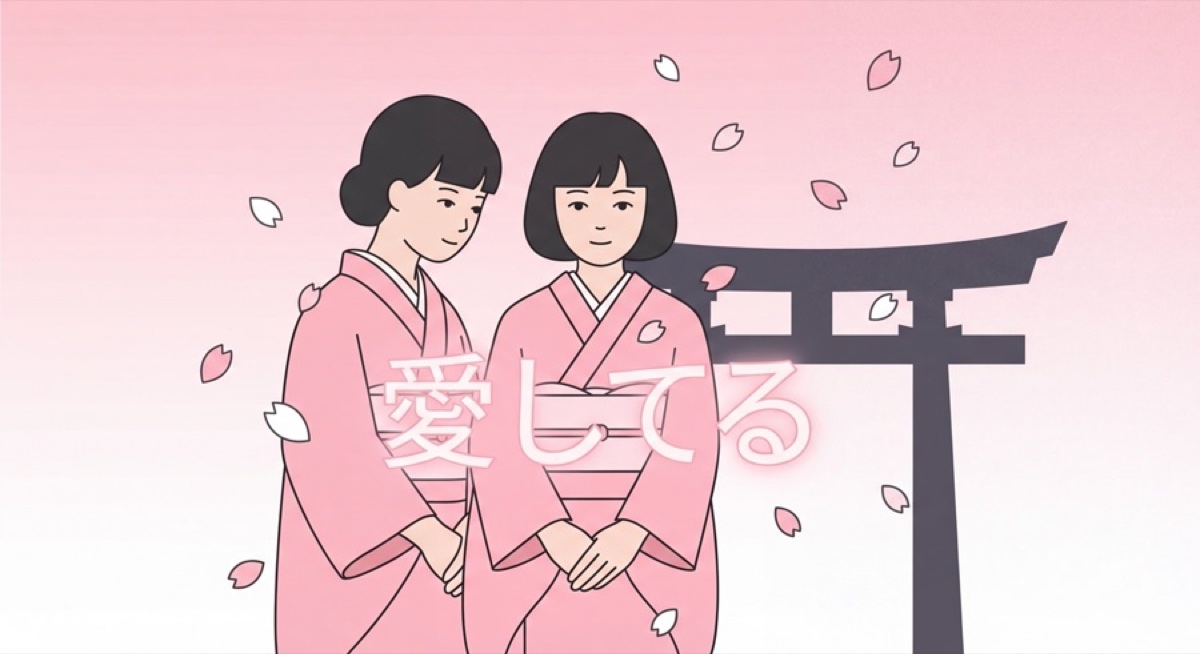
Aishiteru: The Weight of Three Syllables
Aishiteru (愛してる) is the Japanese equivalent of "I love you" — and it is so loaded with emotional gravity that most Japanese people go their entire lives without saying it to a romantic partner. This is not because Japanese people love less; it is because the phrase has been elevated to such intensity that using it casually would feel false. In Japanese romantic culture, aishiteru is the nuclear option — it is reserved for moments of absolute, irreversible declaration. Some couples say it once, on the day they commit fully to each other. Others never say it at all.
The characters that make up aishiteru reinforce its gravity: 愛 (ai) is the character for love itself, a concept with Buddhist resonance, often associated with attachment and compassion in philosophical contexts. When you say aishiteru, you are invoking this whole tradition. It is the difference between saying "I love you" and saying "you are bound to my soul." Most Japanese couples, wisely, look for other ways to say what they mean.
Suki Desu and Daisuki: The Everyday Language of Affection
The phrase Japanese people actually use to express romantic love is suki desu (好きです) or its more intense form daisuki (大好き). Literally, suki means "like" — but context transforms it entirely. When said to a romantic partner with full sincerity, suki desu carries the weight of a love declaration. Daisuki intensifies this: "I really like you" shades into "I love you very much." These phrases allow emotional expression without the overwhelming finality of aishiteru.
There is also koi shiteru (恋してる), which uses the character for romantic longing (恋, koi) rather than deep love (愛, ai). This phrase captures the giddy, falling-in-love stage — the kind of love that flutters and aches. Japanese distinguishes between these emotional states in ways that English simply does not. Our Say "I Love You" translator can help you hear the pronunciation of these phrases, and our article on words for love that don't exist in English explores similar distinctions from around the world.
Non-Verbal Love: How Japanese Culture Shows Affection
Understanding Japanese love requires stepping outside the Western assumption that love is primarily verbal. In Japan, love is most authentically expressed through action, attention, and presence. A partner who wakes early to prepare a beautifully arranged bento box is saying something profound. A spouse who meets their partner at the train station after a long business trip is performing an act of love. The concept of omoiyari — anticipating another's needs before they are expressed — is perhaps the most romantic thing in Japanese culture, and it has no exact English equivalent.
Physical affection in public is still relatively uncommon in Japan compared to Western norms, though this is changing among younger generations, particularly in major cities. The word skinship (a Japanese-English blend) refers to the intimacy created through physical closeness — holding hands, sitting close, a hand on the shoulder. These gestures carry romantic weight precisely because they are not taken for granted. Love, in the Japanese tradition, is shown through the quality of your attention rather than the frequency of your declarations.
Confessions: The Japanese Art of the Love Declaration
Japan has a rich tradition around the romantic confession — kokuhaku (告白), which literally means "confession." Unlike in many Western cultures where romantic feelings are negotiated gradually and ambiguously, kokuhaku is a clear, deliberate declaration: "I like you. Will you go out with me?" It marks the official beginning of a relationship, and both the declaration and the response are taken very seriously. There are even particular settings associated with successful confessions — cherry blossom season, rooftop after school, the walk home at dusk.
The formality and intentionality of kokuhaku reflects something important about Japanese romantic culture: love is considered too significant to be casual about. You do not drift into a relationship; you choose it, deliberately, and mark that choice with a declaration. This stands in interesting contrast to the rarity of aishiteru once a relationship is established — the Japanese invest the declaration at the beginning, then let action carry the message forward.
Valentine's Day and White Day: Japan's Twin Love Holidays
Japan has developed a uniquely two-phase romantic holiday tradition. On Valentine's Day (February 14th), it is women who give chocolate to men — not just to romantic partners, but to colleagues and male friends as well, in a practice called giri-choco (obligation chocolate). Romantic chocolate, given to someone you genuinely love, is called honmei-choco (true feeling chocolate), and the difference matters enormously. Many Japanese women make their honmei-choco by hand as an expression of the care they feel.
Then, on March 14th — White Day — men are expected to reciprocate. The gift should be roughly two to three times more valuable than what they received, expressing gratitude and affection. This elaborate, choreographed exchange of affection is quintessentially Japanese: love expressed through careful, reciprocal, socially recognized ritual. It removes the vulnerability of spontaneous declaration while still creating space for genuine feeling. For more on how cultures ritualize love differently, see our article on how different cultures express love.
Japanese Pop Culture and the Global Language of Love
Despite — or perhaps because of — its verbal restraint, Japan has produced some of the world's most emotionally powerful romantic art. Manga and anime have given global audiences archetypes of love that transcend language: the slow-burn romance, the moment of kokuhaku, the unspoken understanding between two people who know each other completely. Countless non-Japanese people have learned daisuki and aishiteru from their favorite anime before they learned a single other word of Japanese.
Japanese literature, too, has produced devastating love stories — from the classical Tale of Genji (often called the world's first novel, a story entirely about love and desire) to the contemporary novels of Haruki Murakami, whose lovelorn protagonists wander through modern life searching for connection. Japanese love stories tend toward a particular flavor of longing — beautiful, melancholy, suffused with the awareness that nothing lasts. This sensitivity, this awareness of impermanence (mono no aware), gives Japanese romantic culture its distinctive, aching beauty. Explore our Love Quotes for beautiful voices from Japanese and world literature alike.
Practical Tips for Expressing Love in Japanese
If you are in a relationship with a Japanese person or hoping to connect with someone Japanese, the most important thing to understand is that actions speak louder than declarations. Show up consistently, pay attention to detail, anticipate needs, and be reliable. These are the love languages of Japanese culture, and they will mean more than any phrase you learn.
That said, language still matters. Learning even basic Japanese phrases of affection — daisuki, suki da yo (casual male "I like you"), issho ni itai ("I want to be with you") — will be noticed and appreciated. Our Say "I Love You" translator is a good starting point for pronunciation, and the Love Poem Generator can help you craft a written expression of feeling. For the full landscape of cross-cultural love language, return to our hub on how to say "I love you" in every language.