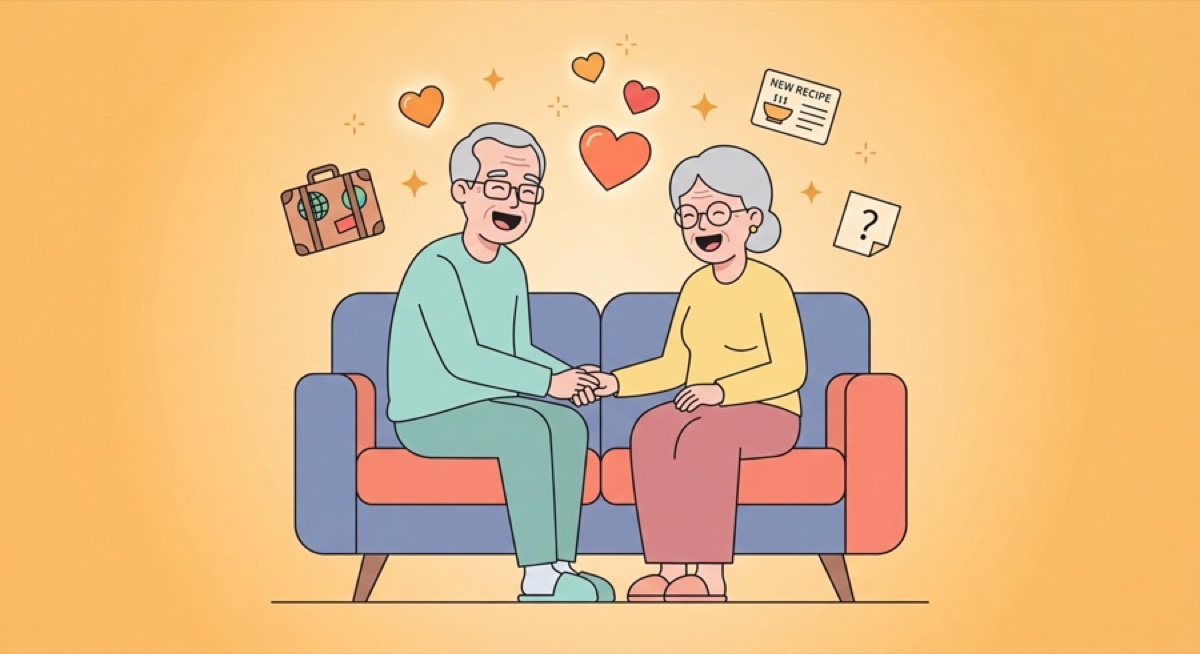
Why Romance Fades — and Why It Doesn't Have To
The fading of early romantic intensity is neurologically inevitable. The brain cannot sustain the dopamine-and-norepinephrine storm of new love indefinitely — it would be exhausting and ultimately disabling. What replaces it, if both people invest in the relationship, is something qualitatively different: a deeper, quieter, more secure form of love that runs on oxytocin and vasopressin rather than adrenaline. This is not a lesser love — it is, in many ways, a better one. But it requires more deliberate maintenance than early-stage love, which maintains itself.
The couples who lose romance entirely are those who mistake the transition from intensity to security for the loss of love itself. They stop investing because the investment no longer feels urgent. The couples who sustain romance are those who understand that long-term romantic satisfaction is not a state you arrive at — it is a practice you maintain. That practice is the subject of this article.
The Novelty Principle: Why New Experiences Matter
One of the most robust findings in relationship psychology is that shared novel experiences — things neither partner has done before, that require genuine engagement and sometimes mild challenge — produce measurably higher relationship satisfaction than comfortable, familiar activities. The neurological explanation is straightforward: novelty activates the same dopamine reward pathways as early romantic love. When you try something new together, your brain briefly recaptures the neurochemical profile of the beginning.
This does not require exotic holidays or expensive adventures. Any genuinely new shared experience activates the effect: a cooking class, a dance lesson, a hiking trail neither of you has walked, a new genre of theatre, an escape room, a different neighbourhood explored on a weekend afternoon. The key is genuine novelty — "we've never done this" rather than a comfortable familiar activity. Try to build at least one genuinely novel shared experience into each month. Our Date Ideas tool generates options tailored to your situation and budget, with a focus on engagement rather than expense.
The Attention Habit: Seeing Your Partner Fresh
Long-term partners often stop truly seeing each other. The person becomes so familiar, so expected, that they effectively become background rather than foreground. Research calls this "partner habituation" — and it is one of the strongest predictors of relationship dissatisfaction over time. The antidote is deliberately practising the kind of attention you gave in the early days: noticing, describing, appreciating things about your partner that you would otherwise take for granted.
Practically, this means a few things. Make eye contact during conversations rather than talking at each other while doing other things. Notice something specific about your partner each day — something they said, did, or are — and tell them you noticed. Ask questions about their inner life with genuine curiosity: "What are you most excited about right now?" "What have you been thinking about lately that you haven't told me?" "What's something you'd like us to do this year that we've never done?" Our Questions for Couples tool provides hundreds of prompts for exactly this kind of reconnecting conversation.
Physical Affection: The Maintenance Dose
Physical affection in long-term relationships often follows a predictable decline: early intensity, comfortable frequency, gradual reduction, and eventually — in many relationships — a pattern of touch that is largely incidental or instrumentally sexual. This trajectory is associated with declining relationship satisfaction and emotional distance. The couples who sustain the highest long-term satisfaction maintain non-sexual physical affection throughout — the casual, everyday touches that signal warmth and connection without agenda.
Research by psychologist Kory Floyd suggests that even a six-week practice of increasing physical affection — more hugging, more hand-holding, more casual touch — produces measurable reductions in stress hormones and increases in oxytocin, positive affect, and relationship satisfaction. The maintenance dose is surprisingly low: consistent daily touch, even briefly, is enough to sustain the physiological benefits. Make this a habit rather than a special occasion.
The Appreciation Practice: Naming What You Value
One of the most consistently damaging patterns in long-term relationships is the gradual shift from noticing what is good to noticing what is wrong. Early in a relationship, partners tend to notice and mention positive qualities frequently. Over years, as things become expected, the positive fades into the background and the negative becomes more salient. This is sometimes called "negative sentiment override" — and it is a reliable predictor of relationship decline.
The reversal is straightforward in principle though it requires discipline in practice: regularly and specifically name things you appreciate about your partner. Not general praise ("you're wonderful") but specific appreciation ("I noticed how patient you were with your mother on the phone today and I want to tell you I love that quality in you"). The specificity matters because it proves you were paying attention. Aim for at least one specific, genuine expression of appreciation each day. For written expressions, the Love Letter Generator can help you find the words, and the Romantic Text Messages tool offers immediate options.
Protecting Couple Time: The Non-Negotiable
The single most consistent practical correlate of long-term relationship satisfaction is dedicated, protected couple time — time that is not interrupted by children, work, phones, or other demands, and that is used for genuine connection rather than logistics or parallel passive activities. This time needs to be scheduled, because unlike early-relationship togetherness it will not happen automatically. It will be crowded out by everything else if you let it.
Weekly dedicated time — a date night, a long walk, a shared activity — is the standard recommendation, and the research supports it. But the quality of the time matters as much as the quantity: two hours of genuine, phone-free, present engagement outperform a weekend away spent half-checking work emails. The ritual matters as much as the content: couples who have consistent weekly rituals of togetherness report higher relationship satisfaction than those whose couple time is sporadic and reactive. Plan it. Protect it. Show up for it like it matters — because it does.
When Romance Has Significantly Faded: Recovery
If you are reading this because romance has already faded to a point that concerns you, the most important thing to know is that this is extremely common and that it is recoverable in most relationships. The research on couples who have successfully renewed flagging romantic connection points to a few consistent factors: one or both partners making a deliberate decision to invest in the relationship rather than waiting for motivation to arrive, the introduction of novelty, and the resumption of communication habits — particularly around appreciation and emotional needs — that had lapsed.
Start with one small thing today. Write them a note. Book something to look forward to together. Ask a genuine question and listen to the answer. Tell them one specific thing you love about them. These micro-investments build momentum, and momentum builds the motivation that is hard to generate cold. The Questions for Couples tool, the Date Ideas generator, and the Love Letter Generator are all practical starting points. The first step is the hardest. Take it today.