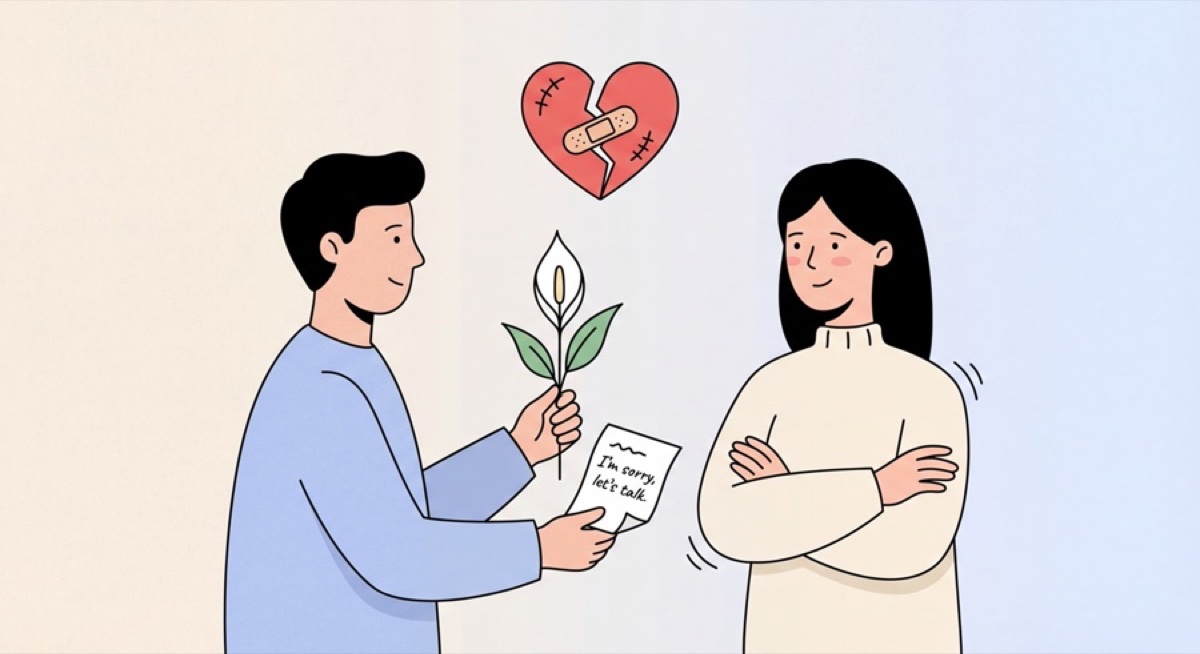
Why Most Apologies Fail
The standard apology — "I'm sorry you feel that way," "I'm sorry but you have to understand that..." — fails because it does not actually take responsibility for the harm done. It acknowledges that the other person is upset without acknowledging that you caused the upset. The person receiving this kind of apology is left in an impossible position: they cannot accept it genuinely, because nothing has been owned, and they cannot reject it without looking unreasonable, because the words "I'm sorry" were technically said.
Research by psychologist Jennifer Robbennolt identified the elements that make apologies effective — that actually produce forgiveness and repair rather than just ending the conversation superficially. They are: a clear acknowledgment of what was done, expression of genuine remorse, explanation (without excuse) if relevant, acknowledgment of harm caused, and an offer or commitment to repair. The absence of any of these elements substantially reduces the apology's effectiveness. Most apologies skip most of them.
The Anatomy of a Real Apology
A genuine apology has a clear structure. It does not need to be long — but it does need to contain specific elements. First: state what you did, specifically. Not "I'm sorry I was difficult" but "I'm sorry I said [specific thing] when we argued on Thursday." Specificity proves you understand what the harm was rather than offering a vague gesture of contrition. Second: acknowledge why it was harmful. "I know that landed hurtfully because it contradicted something I've said I believe, and it probably made you question whether you can trust what I say." Third: express genuine remorse — not for the consequences to you, but for the experience you caused them. "I'm genuinely sorry. You didn't deserve that." Fourth: if relevant and honest, briefly explain (not excuse) what was going on for you. "I was feeling overwhelmed and I took it out on you — that's not acceptable." Fifth: commit to something different. Not a blanket promise never to do it again, but a specific, credible intention.
The Most Common Apology Mistakes
"I'm sorry you feel that way." This is not an apology. It puts the responsibility for the problem on the other person's feelings rather than your actions. If this is your instinct, pause and ask: what did I actually do that hurt them? Start there instead.
The apologetic "but." "I'm sorry, but you have to understand..." — everything after "but" undoes everything before it. If you need to explain context, do it separately, after the apology itself has been given cleanly. An apology followed immediately by self-defense is not an apology.
Apologising for being caught rather than for the act. If your remorse is primarily about the consequences to you — the argument, the withdrawal of affection, the disruption to peace — that will be felt by your partner even if you say the right words. Genuine remorse is about what you caused them, not what you are experiencing as a result.
The apology as negotiation. Ending an apology with "so we're okay now, right?" or "can we just move on?" turns it into a transaction — I gave you words, now you owe me resolution. Genuine apologies do not come with demands. Give the apology cleanly and let the other person process it in their own time.
When You Don't Think You Were Wrong
The most difficult apologies are those where you genuinely believe your position was correct but the way you expressed it was harmful. This is actually common — most relationship conflicts involve two people who are both, to some degree, right about their underlying concern but wrong about how they expressed it. In these situations, you do not need to concede the argument to offer a genuine apology. You can separate the substance ("I still think I had a point about X") from the delivery ("and I should not have said it the way I did").
Apologising for your delivery when you believe in your substance is not capitulation — it is accountability. It says: I stand behind what I was trying to communicate, but not how I communicated it. That distinction is usually accurate and usually heard as genuine. What will not land, and should not land, is a blanket apology for something you do not believe you were wrong about — that kind of apology is a performance, and your partner will sense it.
Receiving an Apology: The Other Side
It takes two people to complete a repair. Receiving an apology well matters as much as giving one. The most damaging patterns in receiving apologies: demanding repeated apologies for the same thing (once it is genuinely given and accepted, bringing it up again uses it as a weapon); not giving the apologiser space to acknowledge accountability without immediately jumping to your own defence; and accepting an apology verbally but continuing to punish the behaviour through withdrawal, coldness, or sarcasm.
Genuine forgiveness is a choice made for yourself as much as for your partner — not because what happened did not matter, but because carrying resentment harms you more than them. It does not require forgetting. It requires making the decision not to use the past as ongoing ammunition. If you are not yet ready to forgive genuinely, it is more honest to say so — "I'm still processing this, I need more time" — than to offer a false acceptance that leaves the wound open.
After the Apology: Rebuilding Trust
An apology is the beginning of repair, not the completion of it. If the harm was significant, trust is rebuilt through consistent behaviour over time — not through the quality of the apology alone. The apology creates the opening; what you do in the days and weeks that follow determines whether the relationship actually recovers.
Be patient with yourself and your partner in this process. Trust that was damaged over time is rebuilt over time. Asking "are we okay now?" repeatedly, or growing frustrated that your partner is still cautious after a genuine apology, undermines exactly what the apology was trying to achieve. Give the process the time it needs. Show up differently. Let that be enough. For conversations that help you rebuild connection after a hard season, our Questions for Couples tool offers prompts designed for exactly this kind of reconnecting. And if you want to put your feelings into writing, the Love Letter Generator can help you find the words for something more lasting than a conversation.