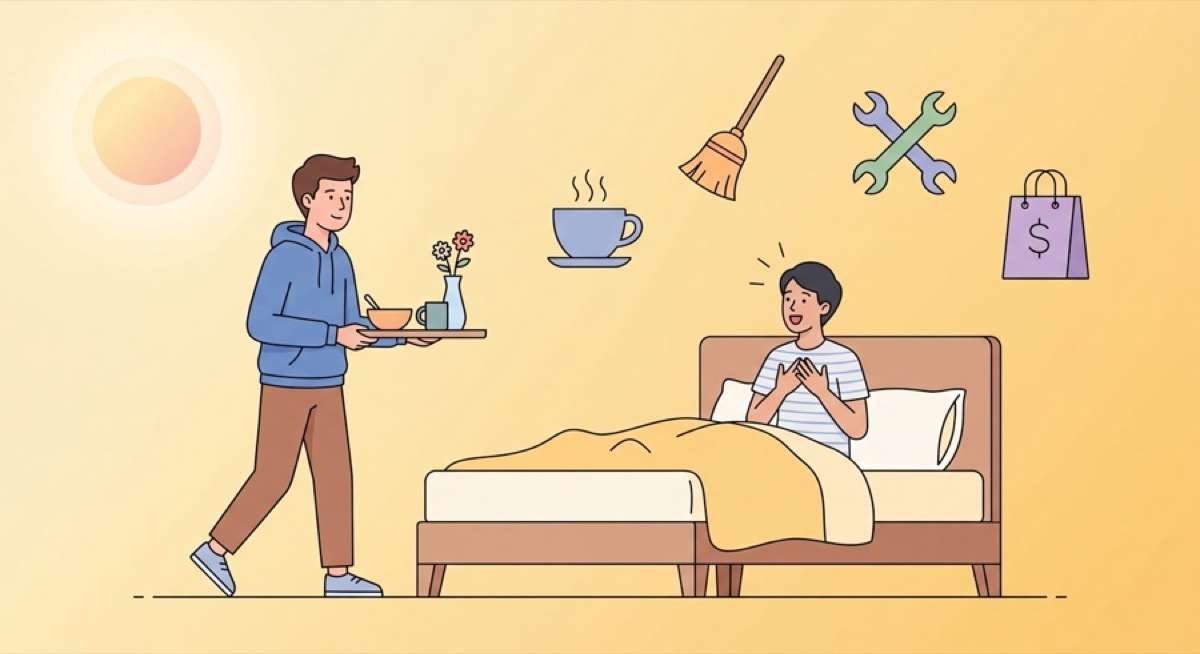
What Acts of Service Means
Acts of Service is one of the 5 love languages defined by Dr. Gary Chapman. People who speak this language feel most loved when their partner takes concrete, helpful actions to make their life easier, more comfortable, or less stressful. This could be as simple as filling up the car with petrol, making a doctor's appointment they've been putting off, or handling bedtime with the kids so their partner can rest. The action itself is the message: I see you, I care about you, and I'm willing to do something about it.
Unlike Words of Affirmation, where the vehicle is language, or Receiving Gifts, where it's an object, Acts of Service is entirely about effort and follow-through. This person notices not just what you say but what you actually do. They feel your love most when you act without being asked, when you remember something that needed doing, or when you take on a task that you know weighs on them. Conversely, broken promises or a pattern of empty offers feel like a direct withdrawal from their emotional bank account.
Why Actions Speak Louder Than Words for This Person
People whose primary language is Acts of Service often have a heightened awareness of the practical demands of life — the load of household management, the mental juggle of responsibilities, the invisible labour that keeps a household or relationship functioning. When their partner notices that load and voluntarily shoulders part of it, it communicates something words can't: "I see the weight you're carrying, and I want to help carry it with you."
For many Acts of Service people, hearing "I love you" while the dishes sit in the sink and an errand from last week remains undone creates a cognitive dissonance. The declaration of love doesn't match the evidence. This isn't about being demanding — it's about how they're wired to interpret care. Understanding this shifts the lens from "they're being difficult" to "they're telling me exactly how to reach them." This insight is also valuable when you're working through different love languages in a relationship.
What Actually Counts as an Act of Service
Not every helpful action registers as an act of love for this person — context and intention matter. An act of service that truly lands has three qualities: it was done willingly (not with a sigh or a complaint), it addressed something the person actually needed or valued, and ideally it was done without being asked. The last point is important because having to ask for help is often exhausting for this person — they may feel they've already been silently asking by not doing the thing themselves.
Acts of service also don't have to be grand gestures. In fact, the accumulation of small, consistent acts is more powerful than the occasional dramatic one. Making tea without being asked, quietly booking a reservation for a night they mentioned they wanted, or handling an admin task they've been dreading — these small, everyday acts compound into a felt sense of being deeply loved and supported.
50 Acts of Service Examples
Here are 50 genuine acts of service, ranging from small daily gestures to larger efforts that show deep care. Tailor them to your partner's specific needs and circumstances.
Everyday Household (1–15):
1. Make the bed without being asked.
2. Do the dishes before they've had a chance to pile up.
3. Put a load of laundry on — and actually transfer it to the dryer.
4. Grocery shop based on a running list you've been keeping.
5. Cook dinner on a night your partner had a hard day.
6. Take out the bins on bin day, consistently.
7. Wipe down the kitchen after cooking without leaving it for later.
8. Fold and put away laundry, not just wash it.
9. Replace things when they run out (toilet paper, soap, milk).
10. Clean the bathroom without being asked or nagged.
11. Vacuum before guests arrive so they don't have to.
12. Empty the dishwasher before they wake up.
13. Make their lunch the night before a busy day.
14. Defrost the freezer or clean the fridge.
15. Handle a household admin task — renewing insurance, paying a bill — that's been lingering.
Life Management & Logistics (16–30):
16. Book a restaurant for a date night and handle all the details.
17. Schedule a vet, doctor, or dentist appointment they've been avoiding.
18. Fill up the car with petrol before they need to drive somewhere.
19. Research and book a holiday based on things they've mentioned they'd love.
20. Return something they bought that didn't work out.
21. Handle a difficult phone call they've been dreading.
22. Set up a new piece of technology or fix a recurring problem with a device.
23. Renew a prescription or handle a pharmacy pickup.
24. Deal with a bureaucratic task — a parking fine, an insurance claim, a form.
25. Research options and make a decision on something they've been overthinking.
26. Arrange for a tradesperson when something needs fixing at home.
27. Buy a birthday or holiday gift on behalf of both of you.
28. Pack the car before a long trip.
29. Handle check-in and boarding passes before a flight.
30. Organise childcare for a night they need to rest or go out.
Thoughtful & Personal (31–45):
31. Bring them a coffee or tea exactly how they like it, unprompted.
32. Run them a bath after a hard week.
33. Pick up a snack they love when you're at the shops.
34. Charge their phone or put their charger next to their side of the bed.
35. Set out everything they need the night before an early or stressful morning.
36. Help them prepare for a big presentation or important event.
37. Take their car in for a service or tyre check.
38. Handle a project around the house they've mentioned wanting done.
39. Do an extra school run or pickup so they get some time to themselves.
40. Lay out their clothes when they're rushing in the morning.
41. Walk the dog on a day you know they're overwhelmed.
42. Water the plants when they're away.
43. Organise a drawer, cupboard, or shelf that's been bothering them.
44. Write down directions or instructions for something so they don't have to remember.
45. Take a task entirely off their plate during a stressful season — no questions asked.
Emotional & Relational Support (46–50):
46. Research a topic they're worried about so they have good information.
47. Set a reminder for an important date in their life and follow through.
48. Help them prepare for a difficult conversation with someone.
49. Listen actively while they vent, and offer to help problem-solve only if asked.
50. Do something they hate doing — their least favourite chore, an obligation they dread — simply because you can and they shouldn't have to do it alone.
When Acts of Service Feel Like Obligation vs. Love
There's an important nuance here: acts of service done with resentment, sighing, or a sense of martyrdom don't land as love — they land as guilt or burden. Dr. Chapman makes this clear: it's the spirit in which the action is taken that transforms a task into an expression of love. If you do the dishes while muttering about it, your partner may actually feel worse than if you hadn't done them at all.
This means that learning to serve your partner willingly and cheerfully is part of speaking this language fluently. If you're feeling resentful about a particular type of task, that's worth addressing — either by communicating openly, dividing responsibilities differently, or exploring why the resentment exists. A healthy Acts of Service dynamic is one where both partners feel the load is shared and that help is given freely, not reluctantly.
How to Speak Acts of Service If It's Not Your Language
If your natural inclination is to express love through words or gifts, shifting toward Acts of Service requires deliberate attention to the practical details of your partner's life. The best starting point: ask them to name three things that, if regularly taken care of, would make their daily life meaningfully easier. Then commit to those three things. Don't add them to a list and forget — actually do them, consistently.
It also helps to adopt a practice of noticing. Start observing the tasks your partner handles, the responsibilities they carry, the things they do without recognition. This awareness naturally generates opportunities to act. Over time, as the habit builds, it stops feeling like effort and starts feeling like love in action — which is exactly what it is. For more ways to show love across different situations, explore our love languages in long distance guide and our Date Ideas tool for Acts of Service-inspired date nights.