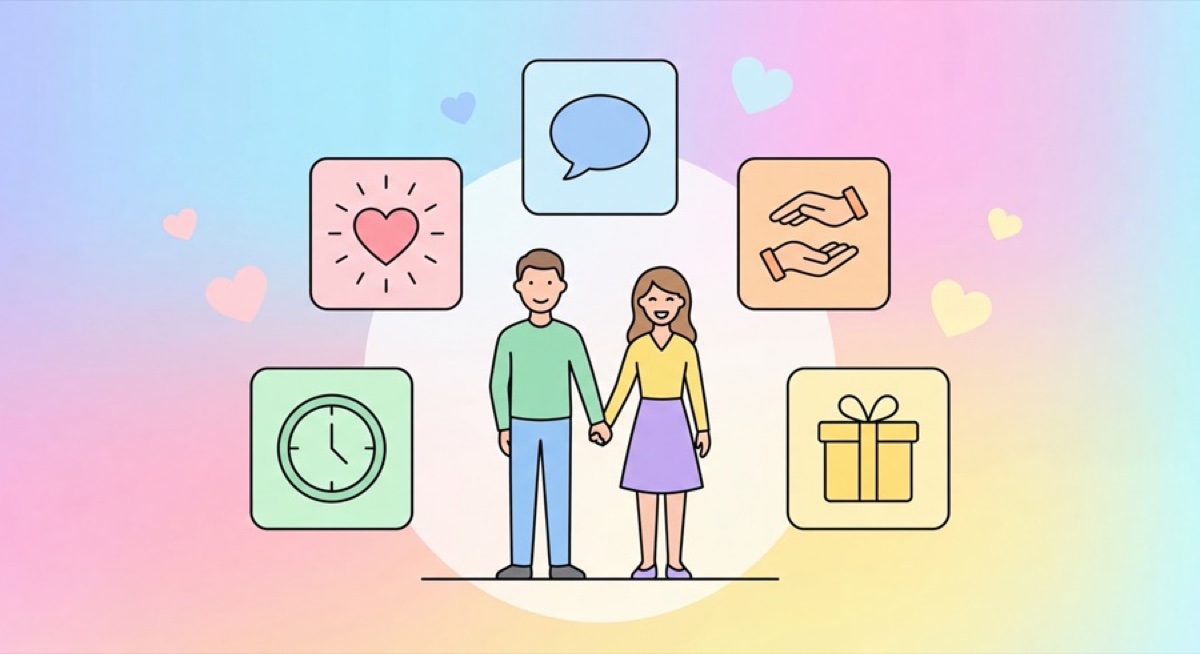
What Are the 5 Love Languages?
The concept of love languages was introduced by Dr. Gary Chapman in his 1992 book The 5 Love Languages: The Secret to Love That Lasts. Chapman, a marriage counselor with decades of experience, noticed a pattern in struggling couples: people were expressing love in ways that felt meaningful to them, but not necessarily to their partners. His insight was simple but profound — we each have a primary "language" through which we feel most loved, and when partners speak different languages, emotional disconnection follows.
The five languages are: Words of Affirmation, Acts of Service, Quality Time, Physical Touch, and Receiving Gifts. Most people have one or two primary languages, though all five matter to some degree. The key is learning which language makes your partner feel truly seen and cherished — and then speaking it consistently.
Words of Affirmation
For people whose primary love language is Words of Affirmation, verbal expressions of love, appreciation, and encouragement are the most powerful way to feel cared for. This goes beyond "I love you" — it includes compliments, expressions of gratitude, words of support during hard times, and sincere praise. A text that says "I'm so proud of you" can mean the world to someone who speaks this language.
If your partner lights up when you verbally acknowledge their efforts or tell them specifically what you appreciate about them, Words of Affirmation is likely their primary language. The opposite is also telling: harsh words, criticism, or silence during conflict can cut far deeper for this person than it would for others.
Acts of Service
Acts of Service means doing things — practical, helpful tasks — to show love. Making dinner when your partner is exhausted, handling an errand without being asked, fixing something that's been broken for weeks: these are acts of love for someone who speaks this language. The motto here is "actions speak louder than words," and they genuinely believe it.
People who value Acts of Service feel loved when their partner makes their life easier or removes a burden. Broken promises and laziness register as a lack of love to them. If your partner frequently says things like "I just wish you'd help more around the house," they may be communicating in Acts of Service — and asking you to meet them there.
Quality Time
For the Quality Time person, love is spelled P-R-E-S-E-N-C-E. Not just being in the same room, but giving undivided, focused attention. Eye contact, active listening, and putting away distractions (especially phones) are essential. A walk where you genuinely talk and connect is more meaningful to this person than an expensive gift given during a distracted five-minute conversation.
Quality time is often misunderstood as quantity of time. But two hours of half-present togetherness doesn't compare to thirty minutes of genuine, phone-free, engaged connection. Couples who struggle with this language often need to be intentional about carving out real together time — not just co-existing in the same space.
Physical Touch
Physical Touch is far broader than most people assume. Yes, it includes intimacy — but it also means holding hands, a squeeze on the shoulder as you pass each other in the kitchen, a long hug, or sitting close enough to touch on the couch. For people whose primary language is Physical Touch, these small gestures communicate safety, love, and belonging in a way nothing else can replicate.
Touch deprivation is real and painful for someone who speaks this language. When they are upset, the most comforting thing their partner can do is often simply hold them — no words needed. In long-distance relationships, the absence of physical touch is one of the hardest challenges this person will face, requiring creative workarounds and extra effort in other languages.
Receiving Gifts
Receiving Gifts is the most misunderstood love language, often dismissed as materialism. But for people who speak it, gifts are visual symbols of love and thoughtfulness. It's not about the price tag — it's about the fact that you thought of them, remembered something they mentioned, or took the time to find something meaningful. A pressed flower, a handwritten note, or a bag of their favorite candy can be just as powerful as an expensive present.
The flipside is equally important to understand: forgetting a meaningful occasion like a birthday or anniversary is perceived not just as forgetfulness, but as a statement that they don't matter. Gifts are tangible proof that they were in your thoughts, which is what their heart truly craves.
How to Use This Guide
This hub covers every angle of love languages — from deep dives into each individual language, to practical guides for couples with mismatched languages, long-distance relationships, and parenting. Start by taking the Love Language Quiz to identify your own primary language, then explore the spoke articles that are most relevant to your situation.
If you're just starting out, we recommend reading the article on how to find your partner's love language and then the article on navigating different love languages in a relationship. Love languages are tools, not labels — the goal is always deeper understanding and more intentional love.
A Note on Love Languages and Relationships
Love languages are a framework, not a rigid personality system. Your primary love language can shift over time, especially after major life events like having children, losing a job, or going through grief. They can also vary slightly by relationship — you might crave Quality Time from a romantic partner but Words of Affirmation from a parent or close friend.
The true value of love languages isn't in the categorization — it's in the conversations they spark. When couples talk openly about how they feel most loved, they build the kind of emotional intelligence that sustains relationships through all of life's seasons. Use these articles as a starting point for those conversations. And don't forget to explore our Questions for Couples tool for guided prompts that can open up exactly these kinds of discussions.